PRK Laser Eye Surgery
Suitability assessment and planning with Dr. Nejmi Öztürk, ophthalmologist and eye surgeon, at HG Hospital in Kahramanmaraş, Türkiye — flap-free surface laser
- What PRK laser is; how the epithelium is removed; how it differs from LASEK and No-Touch
- Who it is suitable for (thin cornea, contact sports) and who it is not
- Steps of the procedure, mitomycin C, the bandage lens, the first 3–5 days and clearing of vision in 1–4 weeks
- Risks, PRK or LASIK comparison, assessment and planning in Kahramanmaraş
What is PRK laser eye surgery?
PRK (photorefractive keratectomy) is a refractive laser (laser eye surgery) method in which the epithelium, the outermost cell layer of the cornea (the clear front layer of the eye), is removed and the tissue beneath it is reshaped with the excimer laser. No flap is created; the removed epithelium regenerates by itself within a few days. Myopia (nearsightedness, blurred distance vision), astigmatism (distorted vision) and, to a limited degree, hyperopia (farsightedness, difficulty seeing up close) can be corrected.
PRK is the oldest laser vision correction method performed with the excimer laser; its long-term results have been followed for decades. The epithelium is softened with a dilute alcohol solution and then removed mechanically with a fine instrument. The version in which the epithelium is removed by the excimer laser is called No-Touch (Trans-PRK); the version in which the epithelium is preserved as a single sheet and laid back after the laser is called LASEK.
Because there is no flap, the structural integrity of the cornea is preserved. The trade-off is noticeable discomfort in the first 3–5 days, until the epithelium regenerates, and vision that takes weeks to clear.
Who is PRK suitable for?
PRK is suitable for people aged 18 or over whose prescription has been stable for at least 1 year and who have a low-to-moderate refractive error; it is preferred particularly in the following situations:
- Thin cornea: Because no tissue is used up for a flap, it can be applied to some of the thin corneas that are not suitable for LASIK.
- Contact sports and risk of impact: In sports such as boxing, wrestling and football, and in occupations such as military service, police work and firefighting, the absence of a flap is an advantage.
- A tendency to dry eye: Because there is no flap incision, long-term dry-eye symptoms are usually milder.
- Superficial corneal irregularity and additional correction after previous laser: Combined with a topography-guided profile if needed.
- A selected group of keratoconus patients: Limited surface laser combined with cross-linking (combined CXL-laser).
Who is it not suitable for?
- High prescriptions: the risk of corneal haze and regression increases as the prescription gets larger; in these patients SMILE, LASIK or ICL is considered.
- People whose vision needs to be clear the very next day and who do not accept the discomfort of the first days.
- Progressive keratoconus (thinning and bulging of the cornea); it is considered only together with cross-linking and in selected cases.
- Pregnant and breastfeeding women, and people whose prescription has changed in the last year.
- Diseases that impair wound healing (uncontrolled diabetes, certain immune system diseases), an active eye infection, a history of herpes (cold sore virus) inflammation in the eye, advanced dry eye.
- People in whom a cataract has begun; in this case lens surgery is the more appropriate option.
Examination and tests
The examination before PRK assesses the thickness and map of the cornea to determine whether surface laser is safe and which profile will be used; it usually takes 1–2 hours.
- Prescription measurement without and with drops (cycloplegic refraction).
- Corneal topography and tomography: maps of the front and back surfaces, screening for keratoconus.
- Pachymetry: corneal thickness; the tissue that will remain after the laser is calculated.
- Pupillometry: pupil diameter in the dark.
- Tear tests, eye pressure measurement and a dilated retinal examination (with the pupil widened).
How is PRK surgery performed?
PRK is done with anesthetic eye drops, takes about 10 minutes per eye, and you go home the same day. The steps are as follows:
- The eye is numbed with anesthetic drops; there is no injection or general anesthesia. A small device is placed to keep the eyelids open.
- A dilute alcohol solution is applied to the central cornea for 20–40 seconds; the epithelium softens and is gently removed with a fine instrument. You feel a light touch rather than pain at this stage.
- The excimer laser shapes the cornea in an application that usually lasts 10–60 seconds depending on the prescription; you are asked to look at the target light.
- For high prescriptions or eyes at risk of scarring, a medicine called mitomycin C is applied to the surface of the cornea for a few tens of seconds; the aim is to prevent corneal haze.
- The eye is rinsed with cold saline, antibiotic drops are applied and a protective bandage contact lens is placed. In most patients both eyes are treated in the same session.
- The discomfort felt varies from person to person; during the laser you may notice a faint smell and a clicking sound. Burning and stinging begin a few hours later, once the drops wear off.
PRK step by step
Mechanical removal of the epithelium and the surface laser stages, shown schematically on a cross-section of the cornea.
- Removing the epitheliumThe epithelium is softened with dilute alcohol and then lifted mechanically with a dedicated instrument, exposing the corneal surface beneath.
- Correcting the refractive errorThe excimer laser removes tissue from the corneal surface according to the individual plan; since no flap is prepared, the treatment is applied directly to the surface.
- Applying mitomycin-CIn selected cases, mitomycin-C is applied briefly to reduce the risk of corneal haze developing during healing.
- Bandage lensA protective bandage lens is placed. The epithelium closes within a few days; stinging and watering in the first days are expected.
EpitheliumStromaArea the laser acts on
What is recovery like after PRK?
After PRK, noticeable discomfort and blurred vision are normal for the first 3–5 days; once the epithelium has healed over, the bandage lens is removed and vision clears within 1–4 weeks.
- Days 1–3: This is the period when stinging, burning, watering and light sensitivity are most intense; they usually peak at 24–48 hours. Pain-relieving drops and oral medication, a dimly lit room and sunglasses bring relief. Antibiotic and steroid (cortisone) drops are used as prescribed; do not rub your eyes.
- Days 3–5: The epithelium heals over; the bandage lens is removed at the check-up. Discomfort decreases quickly, while vision is still fluctuating and blurred.
- Weeks 1–2: Vision reaches a level sufficient for daily life; return to desk work is usually after 1–2 weeks. Do not wear eye make-up and keep water out of your eyes.
- Month 1: Vision is largely clear; stay away from swimming pools, the sea, hammams (Turkish baths) and saunas for 4 weeks. The steroid drops are continued for weeks, with the dose gradually reduced.
- Months 1–3: Final clarity and stability settle in. Sunglasses are worn outdoors for 3–6 months to reduce the risk of haze.
Check-ups are usually on day 1, on day 3–5 when the bandage lens is removed, at month 1 and at month 3. Because the day 1 and day 3–5 check-ups are done in Kahramanmaraş, patients coming from Elbistan and the surrounding districts may need to stay a few days or come twice; this plan is worked out together at the examination.
What are the risks and limitations of PRK?
Because there is no flap, PRK is structurally a safe method; its risks mostly belong to the healing period of the surface.
- Discomfort in the first days: Symptoms are more noticeable than after LASIK and SMILE and last 3–5 days.
- Corneal haze: Can occur with high prescriptions and in eyes not protected from the sun; the risk is reduced with mitomycin C, steroid drops and sunglasses. In most cases it clears with time.
- Delayed epithelial healing: Rare; dry eye and some systemic diseases can delay healing.
- Infection: Rare; the risk is slightly higher in the first days while the epithelium is open, so attention is paid to the drop schedule and hygiene.
- Regression: With high prescriptions, part of the prescription can return; additional correction can be done if the cornea is suitable.
- Steroid-related rise in eye pressure: Measured at the check-ups; it is temporary.
- Night halos, glare, under- or over-correction: Can occur as with all laser methods; they fade in most patients.
- Limitations: Vision takes weeks to clear, it is not preferred for high prescriptions, and it does not prevent presbyopia (the need for reading glasses after 40).
PRK or LASIK, PRK or No-Touch?
No single method is superior to the others for every patient; in well-selected patients, the long-term visual results of PRK and LASIK are similar. The differences lie in the corneal thickness required, the speed of recovery and the discomfort in the first days.
| Feature | PRK | LASEK | No-Touch | LASIK / Q-LASIK | SMILE |
|---|---|---|---|---|---|
| Epithelium / flap | Alcohol and mechanical removal | Loosened with alcohol, preserved and laid back | Removed by laser; no contact | A flap is created | 2–4 mm incision |
| Discomfort in the first days | Noticeable; 3–5 days | Noticeable; 3–5 days | Noticeable; 3–5 days | Mild; a few hours | Mild |
| Visual recovery | 1–4 weeks | 1–4 weeks | 1–4 weeks | Usually 24 hours | A few days; full clarity within weeks |
| Thin cornea | May be preferred | May be preferred | May be preferred | Not suitable | Sufficient thickness needed |
| Dry eye | Usually temporary | Usually temporary | Usually temporary | More common; settles in 3–6 months | Less |
| Risk of haze | Present; reduced with mitomycin C | Present | Present; reduced with mitomycin C | Almost none | Very low |
Preserving the epithelium in LASEK was thought to reduce discomfort and the risk of haze, but studies have not shown a clear advantage. PRK and No-Touch differ solely in how the epithelium is removed; the laser correction and the recovery process are largely the same.
Assessment and planning in Kahramanmaraş
Your suitability for PRK is assessed with the examination and measurements at HG Hospital in Kahramanmaraş, Türkiye; the method that suits you is planned together with Dr. Nejmi Öztürk. Dr. Öztürk is an ophthalmologist working in cataract and refractive surgery; he sees patients at HG Hospital (Üngüt Mevkii, Prof. Dr. Necmettin Erbakan Blv. No:209, 46050 Onikişubat / Kahramanmaraş).
HG Hospital is a private hospital contracted with the Turkish social security institution (SGK); patients with valid SGK coverage may use it, although a private-hospital co-payment may apply. Refractive laser surgery to reduce the need for glasses is, however, generally not covered by SGK, and most private health insurance policies also exclude it. Patients without SGK coverage, such as international patients and visitors from abroad, pay privately or through their private or travel health insurance; the hospital checks coverage before treatment. Fee information is given by the hospital after the examination, and insurance coverage is clarified at the consultation.
For patients coming from Elbistan, Afşin, Göksun, Ekinözü and Nurhak, the examination and measurements are planned so that they can be completed on the same day; the drive between Elbistan and Kahramanmaraş takes about 2 hours. Dr. Öztürk does not see patients in Elbistan; for travel, accommodation and check-up planning, see the patients from Elbistan and the surrounding area page.
Dr. Nejmi Öztürk sees patients at HG Hospital in Kahramanmaraş, Türkiye. For patients travelling from other districts or from abroad, examination, tests and treatment planning can be arranged for the same day.
Hospital switchboard (within Türkiye): 444 46 46 · E-mail: info@nejmiozturk.com · HG Hospital, Üngüt Mevkii, Prof. Dr. Necmettin Erbakan Blv. No:209, Onikişubat / Kahramanmaraş, Türkiye
Frequently asked questions
How many days does the pain last after PRK?
Stinging, burning and light sensitivity are usually most intense in the first 24–48 hours and largely settle once the epithelium heals over on day 3–5. Pain-relieving drops, oral medication and cold compresses make this period more comfortable. The severity of the discomfort varies from person to person.
When will I see clearly after PRK?
After the bandage lens is removed, vision reaches a level sufficient for daily life in 1–2 weeks. Clarity is largely complete at 1 month; final clarity can take 1–3 months.
Which is better, PRK or LASIK?
Neither is superior to the other for every patient; the long-term visual results are similar. PRK stands out for thin corneas, for people who play contact sports and for those with a tendency to dry eye; LASIK is preferred by those who want a fast return of vision. The choice is made according to the corneal measurements.
What is LASEK, and is it different from PRK?
In LASEK the epithelium is loosened with alcohol, folded aside rather than removed, and laid back in place after the laser. In PRK the epithelium is removed completely and regenerates. The recovery process and the results are largely similar; today PRK and No-Touch are more widely used.
I have a thin cornea; can PRK be done?
Because no tissue is used up for a flap, PRK can be applied to some thin corneas. The decision is based on the pachymetry and topography measurements and the size of the prescription. If the cornea is very thin or keratoconus is suspected, options such as ICL are considered instead of laser.
What is mitomycin C, and why is it applied?
Mitomycin C is a medicine applied for a few tens of seconds to reduce the formation of scar tissue (haze) on the corneal surface after the laser. It is generally used for high prescriptions and in eyes that have had previous surgery; the decision depends on the prescription and the condition of the cornea.
When is the bandage lens removed after PRK?
The bandage contact lens is removed by the doctor once the epithelium has healed over, usually at the day 3–5 check-up. Do not remove the lens yourself; if it falls out, tell your doctor without rubbing the eye. The drops continue to be used as prescribed while the lens is in place.
How much does PRK surgery cost?
Fee information is given by the hospital after the examination; because the method and the scope of tests are decided individually, no figure is given in advance. Insurance coverage is clarified at the consultation.
I am coming from Elbistan; how many times do I need to come for PRK?
Dr. Nejmi Öztürk does not see patients in Elbistan; the examination and measurements are grouped into the same day at HG Hospital in Kahramanmaraş. For the day 1 check-up and the day 3–5 check-up when the bandage lens is removed, you may need to stay a few days in Kahramanmaraş or come twice. The plan is made together at the examination.
Sources
- Turkish Ophthalmological Society — todnet.org
- American Academy of Ophthalmology (AAO) — aao.org
- European Society of Cataract and Refractive Surgeons (ESCRS) — escrs.org
- National Eye Institute (NEI) — nei.nih.gov
Related pages
- Laser eye surgery — all methods
- No-Touch laser (Trans-PRK)
- LASIK and Q-LASIK eye surgery
- Combined CXL-laser for keratoconus
This page is for information only; diagnosis and treatment decisions are made after an examination. The results of any surgical or interventional procedure may vary from person to person. You are advised to obtain detailed advice from your physician before any procedure.
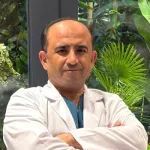
Ophthalmologist and eye surgeon. Graduate of Erciyes University Faculty of Medicine; completed his residency at Ankara Atatürk Training and Research Hospital. With 21 years of experience in cataract and refractive surgery, strabismus, glaucoma, retina and oculoplastic surgery, he sees patients at HG Hospital in Kahramanmaraş, Türkiye. Biography and training
Dr. Nejmi Öztürk
Ophthalmologist and eye surgeon
HG Hospital, Üngüt Mevkii, Prof. Dr. Necmettin Erbakan Blv. No:209, Onikişubat / Kahramanmaraş
+90 506 377 47 68WhatsAppAppointment formHospital switchboard (within Türkiye): 444 46 46 · info@nejmiozturk.com
- Private patients and private health insurance are welcome; patients with SGK coverage may use it (conditions are confirmed by the hospital)
- Same-day examination and test planning for patients travelling from other districts or from abroad
- Getting here and patient information
- Patients from Elbistan and the region