
Blepharitis (Eyelid Margin Inflammation)
Eyelid hygiene training, medical treatment and stye/chalazion drainage — with Dr. Nejmi Öztürk, ophthalmologist and eye surgeon, at HG Hospital in Kahramanmaraş, Türkiye
- What blepharitis is; anterior and posterior blepharitis, the link with Demodex and rosacea
- Symptoms, and the situations in which home care is not enough
- Step-by-step eyelid cleaning, medicines, treatment of styes and chalazia
- Diagnosis and treatment at HG Hospital in Kahramanmaraş, and insurance coverage
What is blepharitis?
Blepharitis (inflammation of the eyelid margin, often described as inflammation at the roots of the eyelashes) is a long-lasting inflammation of the edge of the eyelid and the roots of the lashes. The lid margin becomes red, dandruff-like crusts collect at the base of the lashes, the eye itches and the lids are stuck together in the morning. It usually affects both eyes, lasts a long time and can flare up again. It is not contagious; if neglected, it can damage the surface of the cornea (the clear front layer of the eye).
Anterior and posterior blepharitis
Anterior blepharitis affects the outer edge of the lid where the lashes emerge; bacteria, oily skin that produces dandruff (seborrhoeic dermatitis) or tiny mites called Demodex that settle in the lash roots are responsible. Posterior blepharitis is a blockage of the meibomian glands, which line the inner edge of the lid and produce the oily layer of the tear film; the oil thickens and the tears evaporate quickly. Posterior blepharitis is often seen together with rosacea; in most patients the two types occur together.
What causes blepharitis?
- Overgrowth of bacteria (staphylococci) on the lid margin
- Oily, flaky skin and rosacea
- Demodex mites; they become more common with age
- Blocked meibomian glands; reduced blinking in front of screens makes the picture worse
- Dusty and smoky surroundings, eye make-up that is not removed
What are the symptoms? Who is treatment suitable for?
The main symptoms of blepharitis are redness of the eyelid margin, itching, flakes and crusts at the base of the lashes, and eyelids that are stuck together in the morning.
- Burning, stinging and a feeling of sand in the eye; more noticeable in the morning
- Flakes, yellow crusts or cylindrical sleeves of crust wrapped around the lashes (a sign of Demodex) at the base of the lashes
- Thickening of the lid margin; frequently recurring styes and chalazia
- Loss of eyelashes
Eyelid hygiene and medical treatment are suitable for blepharitis patients of all ages; contact lens wearers and people planned for eye surgery benefit particularly from treatment.
Who is it not suitable for?
In the following situations home care alone is not suitable; an examination is needed without delay.
- People with painful, widespread swelling of the lid and fever: There may be an infection spreading into the lid tissue (cellulitis).
- People whose vision is reduced or who are very sensitive to light: Corneal involvement is considered.
- Older patients with a chalazion that recurs in the same place: Although rare, the removed tissue is examined to rule out eyelid tumours.
- People who do not improve despite one month of regular eyelid hygiene: Demodex, rosacea or another cause is investigated.
- People who develop pain and redness while wearing contact lenses: The lens is removed and is not put back in without an examination.
Which examinations and tests are done?
Blepharitis is diagnosed by examining the lid margin with a slit lamp (eye microscope); most patients need no additional tests.
- Examination of the lid margin and lashes: The type of crusting, redness, lash loss and the cylindrical crusts typical of Demodex are assessed.
- Meibomian gland examination: The lid is pressed and the amount and consistency of the oil coming from the glands are checked.
- Tear tests: The degree of dry eye is measured with the tear break-up time and staining.
- Lash and corneal examination: If in doubt, a few lashes are examined under the microscope for Demodex; damage to the corneal surface is shown with dye.
What happens at the base of the lashes?
Crusting that builds up at the lash base and blockage of the oil glands at the lid margin.
- The lid margin and glandsCrusting at the lash base and blockage of the oil glands at the lid margin are seen together. Complaints are more noticeable in the morning: burning, a stinging feeling, redness and lashes sticking together.
- Effect on the tear filmWhen the glands are blocked, the oil layer thins and tears evaporate quickly. For this reason blepharitis and dry eye are often seen together and treated together.
How is blepharitis treated?
The basis of blepharitis treatment is eyelid hygiene carried out every day; medicines are added during flare-ups and under the doctor’s supervision.
- Warm compress: A clean cloth is soaked in warm-to-hot water and placed over the closed eyelids for 5–10 minutes; it is re-warmed as it cools. The heat softens the thickened oil in the glands. Apply twice a day during a flare-up and once a day afterwards.
- Lid massage: Immediately after the compress, with the eye closed, the upper lid is gently stroked downwards and the lower lid upwards with the fingertip to empty the blocked glands.
- Cleaning the base of the lashes: A few drops of baby shampoo are diluted in warm water, or the lid-cleansing solution or wipes recommended by your doctor are used. With the eye closed, the base of the lashes is wiped sideways with a clean cotton bud and rinsed with warm water; this is done 1–2 times a day.
- Artificial tears: Preservative-free drops are used for dryness and stinging.
- Make-up and lens routine: Eye make-up and contact lenses are paused during a flare-up; make-up is removed completely every night.
Medical treatment
- Antibiotic ointment: Applied to the base of the lashes at night; usually used for 2–4 weeks.
- Oral antibiotics: In rosacea and stubborn posterior blepharitis, a low-dose tetracycline-group or macrolide-group antibiotic may be given for 6–12 weeks; these medicines regulate the function of the oil glands. The tetracycline group is not used in children or in pregnant women.
- Steroid (cortisone) drops or ointment: Used for a short time and under the doctor’s supervision in marked redness and corneal involvement.
- Demodex treatment: Lid cleansers containing tea tree oil are applied regularly for at least 6 weeks.
Treatment of styes and chalazia
A stye (hordeolum) is a painful, red, acute infection of a gland at the base of a lash; a chalazion is a firm lump, which usually does not hurt, formed by oil collecting in a blocked meibomian gland. In both, the basis of treatment is warm compresses and eyelid hygiene; a stye is not squeezed, and antibiotic ointment is added. Chalazia that do not shrink within 3–4 weeks are drained under local anaesthesia through a small incision on the inner surface of the lid (about 10–15 minutes, no visible scar on the outside), or steroid is injected into them. What to expect: brief burning during the injection and a feeling of pressure during the procedure.
Blepharitis in children
In children, blepharitis shows itself with frequently recurring chalazia, red eyes and light sensitivity; corneal involvement is more common than in adults. Treatment begins with eyelid hygiene and antibiotic ointment; in stubborn cases an oral macrolide-group antibiotic is given. Children who are bothered by light should be examined without delay.
What are recovery and the care routine like?
Blepharitis is brought under control with treatment but in most patients does not disappear completely; as long as the care continues, the symptoms stay quiet.
Week 1
Eyelid hygiene is started twice a day and the ointment is applied at night; itching and crusting begin to decrease. If the symptoms have not gone completely in this period, it does not mean the treatment is inadequate.
Month 1
Redness and stinging decrease markedly. At the check-up the steroid drops are stopped and hygiene is reduced to once a day; if oral antibiotics were started, they are completed over 6–12 weeks.
Long term
A warm compress and cleaning of the base of the lashes once a day are continued as a permanent care routine; during a flare-up this is increased to twice a day. Check-ups are at month 1 and month 3, and then 1–2 times a year; for patients coming from the outlying districts, check-ups are grouped on the same day as their other eye examinations.
What are the risks and limitations?
The most important limitation of blepharitis is its chronic course and its tendency to return when care is stopped.
- Side effects of steroids: With long-term use, raised eye pressure and cataract; for this reason they are used for a short time and under supervision.
- Side effects of antibiotics: Oral tetracycline-group antibiotics can cause sensitivity to sunlight and stomach upset.
- Permanent eyelid changes: In blepharitis left untreated for years, lash loss and inward-turning lashes can develop.
- Corneal damage: Particularly in children and in patients with rosacea, new blood vessels and scarring can develop on the cornea.
- After chalazion drainage: Temporary bruising; rarely, recurrence or a small scar.
Comparison: stye, chalazion, blepharitis and dry eye
These four conditions are often confused and frequently occur together.
| Condition | What it looks like | Pain | Treatment |
|---|---|---|---|
| Stye | A red, pimple-like swelling at the base of a lash | Painful | Warm compress, antibiotic ointment; not squeezed |
| Chalazion | A firm, round lump inside the lid | Usually does not hurt | Warm compress; drainage or injection if it does not clear in 3–4 weeks |
| Blepharitis | Redness of the lid margin, flakes at the base of the lashes | Itching, burning | Eyelid hygiene, ointment, oral antibiotics if needed |
| Dry eye | Redness, stinging; the lid margin may be normal | Burning, a feeling of sand | Artificial tears, gland treatment; details on the dry eye page |
For structural problems such as a drooping eyelid, see the eyelid surgery page, and for corneal involvement the corneal diseases page.
This treatment in Kahramanmaraş
The diagnosis and treatment of blepharitis, eyelid hygiene training, and drainage of styes and chalazia are carried out by Dr. Nejmi Öztürk at HG Hospital in Kahramanmaraş, Türkiye. Accompanying dry eye and rosacea are also assessed at the examination.
HG Hospital is a private hospital contracted with the Turkish social security institution (SGK); patients with valid SGK coverage may use it, although a private-hospital co-payment may apply. Examinations, prescribed medicines and chalazion drainage are generally covered by SGK; products such as lid-cleansing wipes are not covered by prescription. Patients without SGK coverage, such as international patients and visitors from abroad, pay privately or through their private or travel health insurance; the hospital checks coverage before treatment. Fee information is given by the hospital after the examination, and insurance coverage is clarified at the consultation.
Patients from Elbistan, Afşin, Göksun, Ekinözü and Nurhak come to HG Hospital in Kahramanmaraş for the examination; Dr. Öztürk does not see patients in Elbistan. For travel planning, see the patients from Elbistan and the surrounding area page.
Dr. Nejmi Öztürk sees patients at HG Hospital in Kahramanmaraş, Türkiye. For patients travelling from other districts or from abroad, examination, tests and treatment planning can be arranged for the same day.
Hospital switchboard (within Türkiye): 444 46 46 · E-mail: info@nejmiozturk.com · HG Hospital, Üngüt Mevkii, Prof. Dr. Necmettin Erbakan Blv. No:209, Onikişubat / Kahramanmaraş, Türkiye
Frequently asked questions
Does blepharitis go away completely?
In most patients blepharitis follows a chronic course; with treatment the symptoms disappear, but they can return when care is stopped. A warm compress and cleaning of the base of the lashes once a day keep the symptoms quiet for a long time.
Can I use baby shampoo to clean the base of my lashes?
Yes; a few drops of baby shampoo diluted in warm water can be used. If it causes dryness and burning of the skin, switch to a solution or wipes made for eyelid cleaning.
Should a stye be squeezed, or does it go away on its own?
A stye is not squeezed; squeezing can spread the infection into the lid tissue. With warm compresses and antibiotic ointment most styes drain on their own within 1–2 weeks; styes that grow or do not clear within 2 weeks are examined.
When should a chalazion be removed?
Chalazia that do not shrink with warm compresses within 3–4 weeks, or that impair vision, are drained. The procedure is done under local anaesthesia through the inner surface of the lid and takes about 10–15 minutes. When a chalazion recurs in the same place, the removed tissue is sent for examination.
What is Demodex, and how is it recognised?
Demodex is a mite, invisible to the naked eye, that lives in the roots of the lashes; it becomes more common with age. Cylindrical crusts wrapped around the lashes and itching that is worse in the morning are the typical signs; if in doubt, a few lashes are examined under the microscope.
Can I wear contact lenses when I have blepharitis?
Lens wear is paused during a flare-up; lenses increase the symptoms and raise the risk of corneal infection. Once the symptoms are under control, you can start again with daily disposable lenses.
Is blepharitis treatment covered by insurance, and how much does it cost?
Examinations, prescribed medicines and chalazion drainage are generally covered by SGK; because HG Hospital is a private hospital contracted with SGK, a co-payment may apply. Patients without SGK coverage pay privately or through their private or travel health insurance. Fee information is given by the hospital after the examination; insurance coverage is clarified at the consultation.
I live in Elbistan; do I need to come for check-ups every month?
No; eyelid hygiene is a treatment that is continued at home. Check-ups are usually planned at month 1 and month 3, and after that 1–2 times a year is enough. In a sudden flare-up an earlier appointment can be made.
Sources
- Turkish Ophthalmological Society — todnet.org
- American Academy of Ophthalmology (AAO) — aao.org
- National Eye Institute (NEI) — nei.nih.gov
Related pages
This page is for information only; diagnosis and treatment decisions are made after an examination. The results of any surgical or interventional procedure may vary from person to person. You are advised to obtain detailed advice from your physician before any procedure.
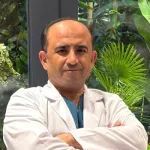
Ophthalmologist and eye surgeon. Graduate of Erciyes University Faculty of Medicine; completed his residency at Ankara Atatürk Training and Research Hospital. With 21 years of experience in cataract and refractive surgery, strabismus, glaucoma, retina and oculoplastic surgery, he sees patients at HG Hospital in Kahramanmaraş, Türkiye. Biography and training
Dr. Nejmi Öztürk
Ophthalmologist and eye surgeon
HG Hospital, Üngüt Mevkii, Prof. Dr. Necmettin Erbakan Blv. No:209, Onikişubat / Kahramanmaraş
+90 506 377 47 68WhatsAppAppointment formHospital switchboard (within Türkiye): 444 46 46 · info@nejmiozturk.com
- Private patients and private health insurance are welcome; patients with SGK coverage may use it (conditions are confirmed by the hospital)
- Same-day examination and test planning for patients travelling from other districts or from abroad
- Getting here and patient information
- Patients from Elbistan and the region